
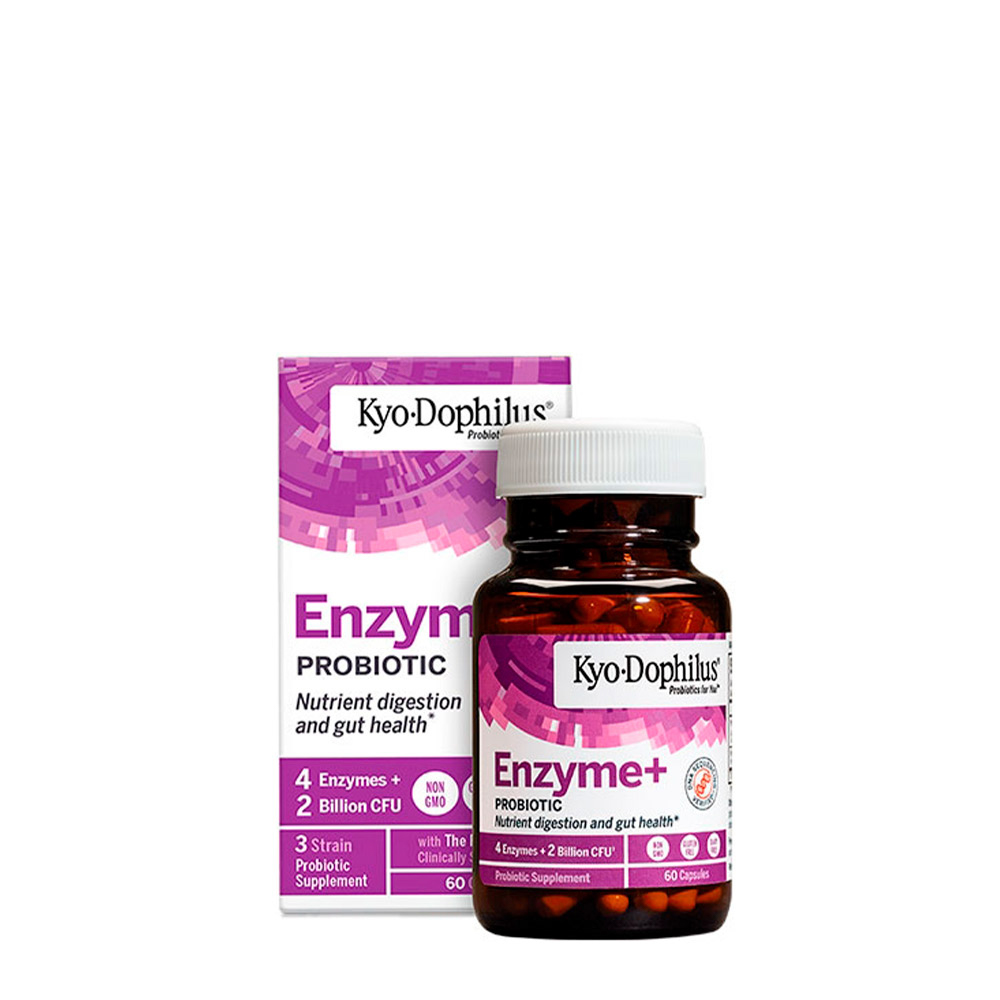
Description
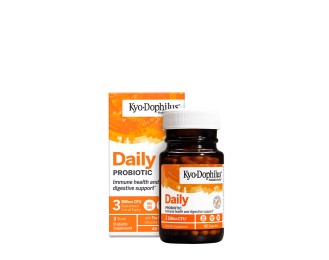
The bacterial strain contained in Kyo-dophilus with enzymes (L. acidophillus) has been specially selected for the intestinal tract.
Its formula contains a complex of digestive enzymes (protease, lipase, amylase and lactase) as well as L. acidophilus.
Lactobacillus acidophillus
This is one of the most important microorganisms with numerous functions in the body, including eliminating pathogenic organisms and preventing them from multiplying, partly due to the production of lactic acid. It also produces lactase and is therefore beneficial for people with milk sugar (lactose) intolerance, improving its absorption. It is used to replenish the beneficial bacteria that have been destroyed by antibiotics. They help reduce recurrent infections of the genitourinary tract.
It has also been proven that these microorganisms produce natural antibiotics that increase resistance and immunity. They help digest proteins and absorb nutrients.
This is a strain of bacteria that is found throughout the small intestine. These bacteria have been shown to inhibit both the development of pathogenic bacteria and the production of gas and toxins.
Relieving intestinal gas
These bacteria act in two different ways to relieve intestinal gas:
1 - In the acidic environment created by these bacteria, less gas (hydrogen) is produced.
2 - They can alter the pre-existing flora and thus change the composition and production of gas. Antibiotics, on the other hand, can destroy both beneficial and pathogenic bacteria and increase gas production.
Decrease in toxic and carcinogenic agents
Acidophilus bacteria inhibit the production of toxic substances such as ammonia, indole and hydrogen sulphide, which are harmful to the human body. This effect is enhanced by the addition of bifidobacteria, reducing the concentration of toxins that pass into the liver. The beneficial bacteria in the intestine recycle toxins such as ammonia, using it as an important source of nitrogen for the synthesis of their own proteins.
Bifidobacteria and acidophilus have the ability to break down nitrosamines (cancer-causing compounds) and can also suppress the production of nitrosamines in the intestines.
Synthesis of vitamins and other nutrients
Bifidobacteria promote the synthesis of vitamin B1, while acidophilus inhibit the growth of bacteria that break down this vitamin.
Cholesterol reduction
Acidophilus can play an important role in cholesterol metabolism. These bacteria have been shown to convert cholesterol into the less absorbable form coprostanol, thus preventing its absorption from the intestinal tract.
Nowadays, our diet is increasingly rich in fats and proteins, nutrients that are difficult to digest. On the other hand, global health organizations recommend an increased intake of foods rich in fibre, which undoubtedly has benefits for our health, but at the same time can make it more difficult to digest food and increase flatulence.
Kyo-dophilus with enzymes is a formula with exogenous enzymes, proteases, lipases, amylases and lyases, which will act together with the enzymes produced by our own body, facilitating the digestion of proteins, fats and sugars.
A study published in 1998 in Nutrition Research Review shows that the administration of exogenous enzymes improves digestion through their positive effects on factors such as water retention capacity, nutrient encapsulation, viscosity and digestive flow.
Kyo-dophilus with enzymes is therefore indicated for difficult digestion, malabsorption syndromes, food allergies and abdominal discomfort caused by excess gas.
Presentation: Pack of 60 capsules.
Benefits
Properties of the strain contained in Kyo-dophilus with enzymes:
Resistant to stomach pH;
Number of beneficial bacteria per dose, clinically proven to be effective;
Stable at room temperature without the need for refrigeration.
The addition of digestive enzymes enables:
Better digestion of sugars, fats and proteins;
Avoid flatulence;
Reduce abdominal discomfort;
Reduce edema.
How to take
Adults as a dietary supplement, take 1 capsule, with meals, 2 times a day.
Children (under 4 years old) 1/2 capsule, with meals, 2 times a day.
Composition
Lactobacillus acidophilus, Complex of food enzymes (protease, lipase, amylase, lactase), Dextrin, Corn starch, Gelatine, Calcium carbonate, Bacterial lactic acid powder, Magnesium stearate.
Per 2 capsules: L. acidophilus - 2 billion live cells; Enzyme complex (protease, lipase, amylase, lactase) - 310mg.
$55.04 Ex Tax: $55.04
$14.41 $18.02 Ex Tax: $14.41
$26.76 Ex Tax: $26.76
$21.77 Ex Tax: $21.77